
24 Hour Service
Call 409-444-0066
The Complete Guide to Collapsed Sewer Line Repair
in Beaumont
Step-by-step solutions for homeowners facing collapsed sewer line issues in Beaumont, ensuring quick and effective repairs.
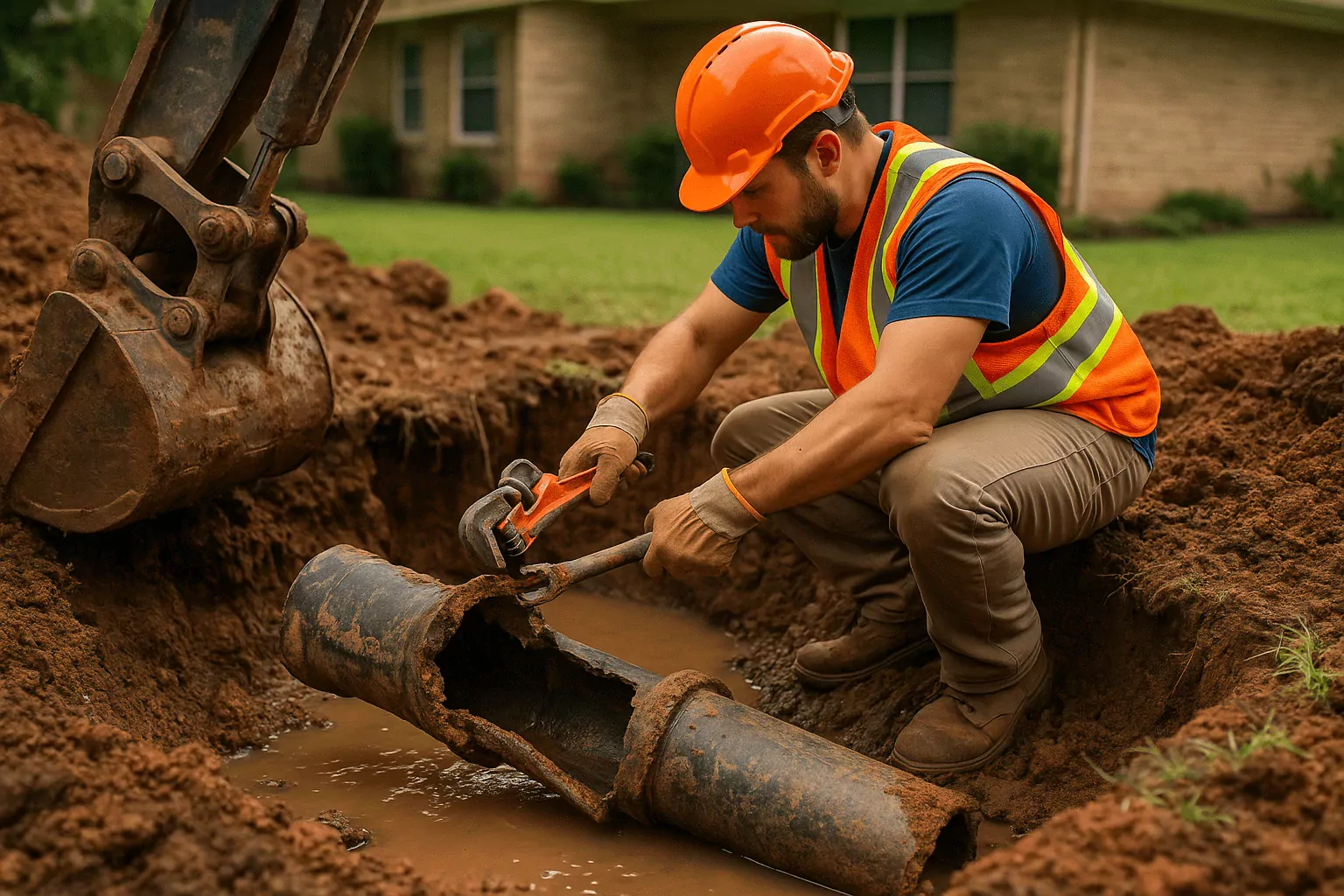
A damaged or failed main line is one of the most disruptive plumbing problems a homeowner can face, which is why understanding collapsed sewer line repair Beaumont is essential. When clay, cast iron, or Orangeburg lines give out, the result can be persistent backups, foul odors, or even foundation concerns if wastewater saturates the soil. Southeast Texas soils, mature landscape trees, and aging infrastructure combine to make Beaumont and nearby communities more vulnerable to sewer failures. In this guide, we explain causes, warning signs, diagnostic steps, and proven repair methods so you can make confident, cost-effective decisions. You will learn when excavation is unavoidable, and how permits and local codes affect timelines. For fast local help, explore collapsed sewer line repair Beaumont options and take action before minor symptoms turn into major property damage.
What causes failures and risks in collapsed sewer line repair Beaumont
Most collapsed sewer lines in Beaumont trace back to a combination of aging materials and ground movement. Older homes often still have clay, cast iron, or Orangeburg pipe that becomes brittle or degrades over decades of use. Expansive Gulf Coast soils shrink and swell with rainfall patterns, stressing pipe joints until they separate or cave in. Tree roots from live oaks and magnolias infiltrate tiny cracks to chase moisture, eventually prying pipes apart and compounding blockages. Construction activity, heavy vehicles over shallow lines, and improper previous repairs can accelerate the collapse timeline.
When a section finally gives way, risks escalate quickly, and prompt collapsed sewer line repair Beaumont becomes vital. Wastewater can back up into showers and floor drains, creating unsanitary conditions and potential mold or bacteria exposure. Saturated soil may undermine slabs or pier-and-beam supports, adding foundation repair to your costs. On some properties, sewage surfacing in low spots or near cleanouts can create environmental and neighbor-relations issues. Acting early protects your home's structure, your family's health, and your wallet by reducing the need for extensive excavation or reconstruction.
Early warning signs and diagnostics for collapsed sewer line repair Beaumont
Early detection is the best way to control costs and disruption when facing collapsed sewer line repair Beaumont. Warning signs often start subtly, such as slow drains throughout the house rather than just one sink or tub. You might notice gurgling sounds after flushing, sewer odors near floor drains, or water levels that rise and fall in toilets. Frequent main line clogs that briefly resolve with snaking but return in days suggest a structural defect instead of a simple blockage. Wet or unusually green patches along the sewer route, especially during dry spells, can indicate a break that is leaking effluent into the soil.
Professional diagnostics confirm what symptoms suggest and point to the right repair strategy. A sewer camera inspection locates breaks, offsets, or collapsed sections and records footage for insurance or permitting. Locating equipment maps the sewer's depth and alignment to avoid utilities and reduce exploratory digging. In some cases, hydrostatic testing and smoke testing reveal hidden leaks or illegal connections stressing your system.
Repair options in Beaumont: traditional approaches to collapsed sewer line repair Beaumont
Homeowners today have more choices than ever for collapsed sewer line repair Beaumont. Sectional spot liners can reinforce short problem areas when collapse is localized, avoiding a full-length project. Traditional open-trench replacement remains the best option when soils have washed out, multiple sections are crushed, or bellies make lining impractical.
Local codes, permit requirements, and environmental considerations influence method selection and sequencing. The EPA provides guidance on preventing sanitary sewer overflows and maintaining system performance, which informs best practices during repairs and rehabilitation efforts; see the EPA overview of SSOs at epa.gov. Wastewater infrastructure guidance from the American Society of Civil Engineers can also help homeowners understand long-term reliability and asset life cycles; review insights at ASCE Wastewater. A licensed plumber will weigh pipe condition, depth, utility conflicts, and driveway or landscaping impacts to tailor the approach.
Costs, permits, warranties, and choosing a contractor for collapsed sewer line repair Beaumont
Budgeting for collapsed sewer line repair Beaumont depends on pipe length, depth, access, and the selected method. Many projects require city permits and inspections to verify slope, materials, and cleanout placement, which protects you and future buyers. Detailed written estimates should spell out lineal footage, pipe specs, access pits, restoration allowances, and warranty terms. Ask about camera footage before and after, as-built maps, and where new cleanouts will be placed for ongoing maintenance.
Selecting the right team protects your investment and ensures your repair passes inspection the first time. Look for licensed, insured pros with open-trench capabilities so recommendations are objective. Review local case studies and references in Beaumont, Orange, and Bridge City to confirm reliability on soil and depth conditions similar to your property. To discuss options or schedule a camera inspection, visit our services page or contact us directly through our contact form for fast scheduling.
Facing a failing main line is stressful, but with the right information and a qualified team, collapsed sewer line repair Beaumont can be resolved quickly and cost-effectively. Start with a camera inspection and choose a method that balances long-term reliability with minimal disruption. For homeowners across Beaumont, Orange, and Bridge City, 409 Plumbing provides diagnostics, permits, and repair execution from one local, accountable team. Call 409 Plumbing at 409-444-0066 to schedule your inspection today. You can also request service online via our contact form or explore solutions on our services hub to get started now.
Frequently Asked Questions About Collapsed Sewer Line Repair
How do I know if I need collapsed sewer line repair Beaumont or just a routine cleaning?
Consistent whole-house slow drains, frequent backups that return within days, and sewer odors usually indicate more than a routine clog. If a plumber has snaked the main multiple times with only temporary relief, a structural problem like a break, offset, or collapse is likely. A sewer camera inspection is the definitive way to tell, revealing the exact location and extent of damage. Evidence such as standing water in the line, visible cracks, or roots penetrating joints suggests repair or replacement rather than another cleaning. Request recorded video and a written report so you can compare options and obtain accurate estimates with confidence.
Will insurance cover collapsed sewer line repair Beaumont, and do I need permits?
Coverage varies by policy, and many standard homeowners policies exclude exterior sewer laterals unless you add a specific endorsement. If roots, age, or wear caused the failure, coverage may be limited; sudden events like a vehicle impact might be treated differently. Cities typically require permits and inspections for sewer repairs to verify slope, materials, and cleanout placement, which safeguards public health and resale value. Your contractor should handle permitting, scheduling inspections, and providing as-built documentation. Ask for video before-and-after and a clear warranty so you have proof of condition and compliance for future reference.
How long does collapsed sewer line repair Beaumont take, and will my yard or driveway be destroyed?
Most residential repairs finish within one to three days, depending on length, depth, method, and restoration needs. Even with open trench, careful planning, shoring, and utility locating keep excavation focused and safe. Your contractor should map utilities, mark access pits, and protect hardscapes to reduce the scope of restoration. A detailed plan with timelines and restoration notes helps you anticipate temporary access limits and ensures your property returns to normal quickly.

Registered Master Plumber Texas State Board of Plumbing Examiners
RMP #44702
Licensed and Bonded
Cities Serviced
409 Plumbing
Follow Us On
© 2026 409 Plumbing. All Rights Reserved.
Website Design and Hosting Provided by LocalBizBuzz,co