
24 Hour Service
Call 409-444-0066
How to Choose the Right Outdoor Kitchen Gas Lines
in Port Arthur
Make informed decisions on outdoor kitchen gas lines in Port Arthur to ensure safety, efficiency, and lasting enjoyment.
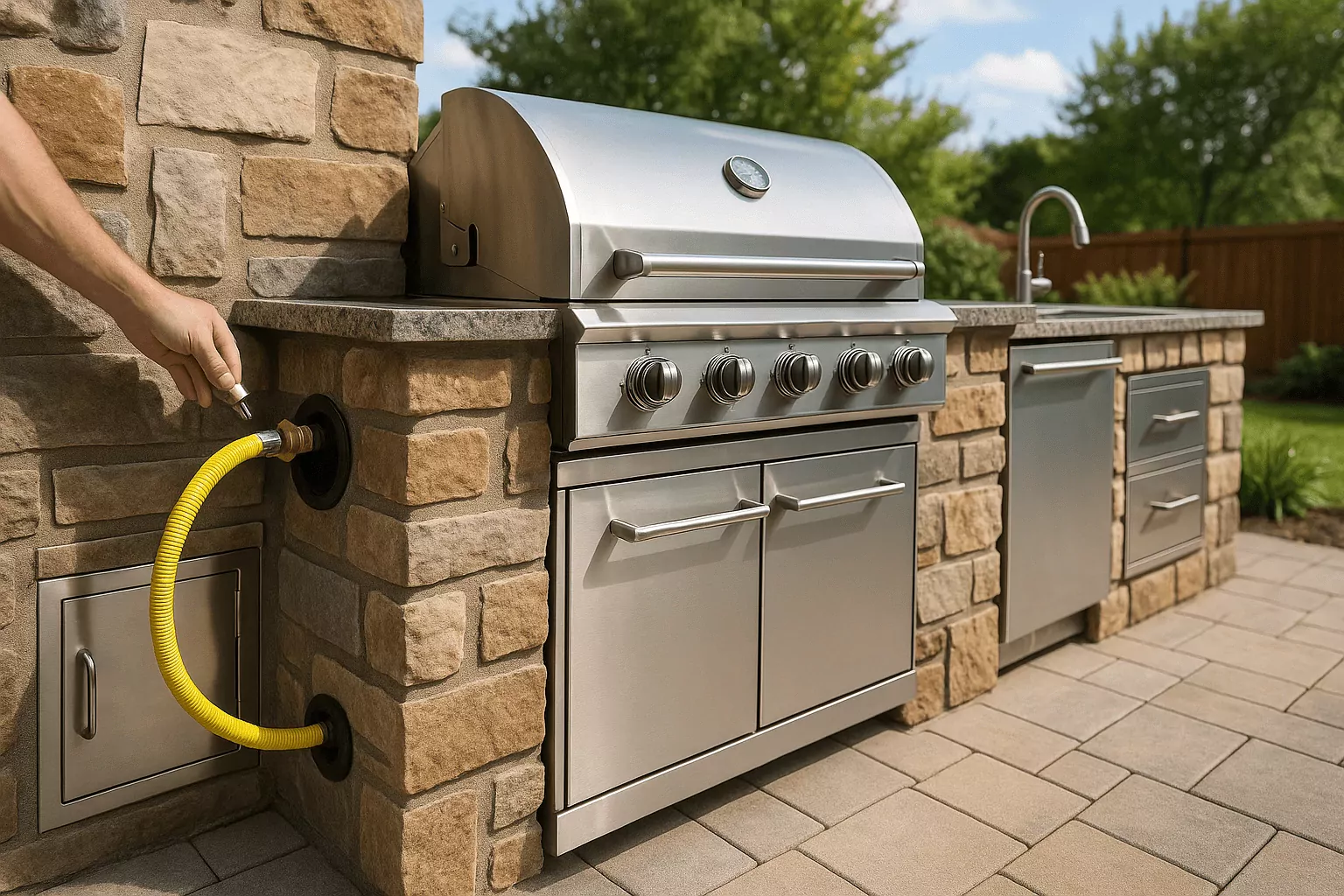
Planning an outdoor kitchen is exciting, but selecting safe and efficient outdoor kitchen gas lines Port Arthur homeowners can rely on requires careful thought. Between local permitting, fuel choices, and the coastal climate, your decisions will shape performance and longevity. The right materials, correct sizing, and a compliant installation will keep your grill, side burners, and pizza oven running smoothly for years. In this guide, we break down codes, materials, routing, and testing so you can make confident choices. We will also highlight real-world examples from the Golden Triangle and offer pro tips for avoiding costly rework. For quick reference or to get started now, learn more about outdoor kitchen gas lines Port Arthur with trusted local pros and schedule a consultation.
Codes, fuel type, and permits for outdoor kitchen gas lines in Port Arthur
Before choosing pipe or planning a route, confirm whether your outdoor kitchen will use natural gas or propane. Many Port Arthur neighborhoods have natural gas service, which is convenient for continuous use and simple utility billing. Rural and some waterfront properties may rely on LP (propane) tanks, which require correct regulator placement and tank setbacks. Each fuel has specific pressure and regulator needs that impact pipe sizing and appliance selection. Start by verifying your fuel and available pressure with your utility or supplier and your plumber to size lines accurately.
Compliance is essential, and the Authority Having Jurisdiction (AHJ) will enforce the adopted fuel gas code. In Texas, the Texas Railroad Commission provides oversight, and most municipalities base requirements on NFPA 54 (National Fuel Gas Code). In practice, that means permits, inspections, and documented pressure testing are required for new or modified gas lines serving an outdoor kitchen. Check the City of Port Arthur permitting portal for submittal steps and inspection timelines, and confirm whether floodplain considerations apply to your property. Your licensed plumber should prepare a sketch with pipe sizes, appliance BTU loads, and routing for permit review.
Expect a straightforward process when working with an experienced installer. A typical permit package includes the application, a line diagram, and a list of appliances with BTU ratings. The pressure test is commonly performed with a calibrated gauge and monitored by the inspector for a specified duration per local rules. You will also need accessible shutoff valves, proper venting for enclosed cabinets, and bonded metallic systems to prevent electrical hazards. When in doubt, ask your contractor to review code notes with you so everything clears inspection the first time.
Material choices and components that last in the coastal climate
Port Arthur's coastal environment means salt air, humidity, and the potential for corrosion, so material selection matters. Above ground, many outdoor kitchen projects use black steel pipe for rigidity and durability, with epoxy-coated options offering extra corrosion resistance. For complex runs through walls or cabinets, CSST (corrugated stainless steel tubing) can speed installation when protected per manufacturer instructions and local code. For underground runs from the house to a patio island, PE (polyethylene) gas pipe with approved anodeless risers and tracer wire is a common, code-compliant choice. Your installer may combine materials to optimize cost, protection, and performance.
Beyond the piping, the right accessories improve safety and convenience. A dedicated, labeled shutoff valve near the kitchen island lets you isolate appliances for service. Quick-disconnect fittings rated for outdoor gas service make it simple to move grills for cleaning or off-season storage. Sediment traps help keep debris out of appliance valves, and stainless-steel appliance connectors provide flexible, corrosion-resistant hookups. Vent panels in enclosed cabinets and proper clearances protect against gas accumulation and heat damage.
Here is a snapshot of how materials stack up for outdoor kitchen gas lines Port Arthur residents consider:
Sizing, routing, and testing for reliable performance
Proper sizing prevents weak flames and nuisance shutdowns when multiple appliances run at once. Your plumber will total the BTU load for all appliances, account for the longest piping distance, and select a pipe diameter from code sizing tables. Systems can be configured as low-pressure (commonly 0.25 psi) or as 2 psi systems with point-of-use regulators; the latter can reduce pipe size on longer runs. The layout matters too: trunk-and-branch systems are common, but manifolds can deliver more balanced pressure to high-demand appliances like pizza ovens. Getting these details right ensures you can crank the grill, side burner, and fire feature together without a hiccup.
Routing should protect piping from physical damage and heat while meeting code clearances. Buried PE lines are typically installed below the frost line and at the minimum depth required by the AHJ, often 18 inches or more, with caution tape placed above the line. Transitions from underground to above ground must use listed risers, and sleeves are recommended where lines pass under slabs or through walls. Keep gas lines separated from electrical conduits as required, and avoid low spots that could collect condensate unless a drip leg is installed. Ventilation in island cabinets is critical whenever gas lines and appliances are enclosed.
Pressure testing verifies the integrity of your new system before appliances are connected. Your installer will isolate the new piping, pressurize it with air or inert gas to the test pressure set by local code, and monitor a test gauge for the required period. Many AHJs in Texas accept tests around 10 to 15 psi for 15 minutes or more on residential systems, but your inspector will specify the exact method. Documenting a stable test reassures you that buried and concealed segments are leak-free. After the final inspection, appliance hookups, ignition checks, and leak verification complete the job.
Professional installation, timelines, and costs in the Orange-Beaumont-Port Arthur area
Working with a licensed, insured plumber keeps your project compliant and on schedule. At 409 Plumbing, we start with a site walk to confirm fuel source, appliance list, distances, and ideal routing. We then prepare a permit-ready sketch, coordinate inspections, and stage materials to minimize yard and patio disruption. Typical timelines run 1 to 2 weeks from permit approval to final inspection, depending on weather and inspector availability. For transparent planning, we explain options such as coated steel vs CSST vs PE underground so you can balance upfront cost and long-term durability.
Costs vary with distance, number of appliances, material choices, and trenching or slab work. As a rough example, extending a short natural gas line to a nearby grill stub with black steel might be a modest one-day job, while a long PE underground run with multiple island drops, shutoffs, and quick disconnects can be more involved. Coastal upgrades like coated materials and stainless connectors add resilience with a small premium. We provide fixed, written proposals when scope is clear and can phase work if you plan to add appliances later. Clear communication and detailed diagrams help avoid change orders.
Consider a recent case in the Port Arthur-Orange area: a family wanted a grill, side burner, and pizza oven on a new patio island 60 feet from the meter. We designed a 2 psi PE underground main with a manifold and point-of-use regulators to maintain stable pressure during peak cooking. Coated risers, labeled shutoffs, and stainless connectors simplified service and added corrosion resistance. The system passed pressure testing and inspection on the first try, and the homeowners now run all appliances simultaneously without flame drop-off. Thoughtful planning turned a complex layout into a reliable weekend workhorse.
Choosing outdoor kitchen gas lines Port Arthur homeowners can trust comes down to smart planning, durable materials, precise sizing, and code-compliant installation. Start by confirming your fuel and local permitting, then match materials to the coastal climate for long-term reliability. Insist on documented pressure testing and clear labeling so your system is easy to maintain and expand. If you are ready to design or upgrade your outdoor kitchen, 409 Plumbing is here to help with expert planning, permitting, and installation. Call 409 Plumbing at 409-444-0066 to schedule a consultation. We proudly serve Orange, Beaumont, Bridge City, and the greater Port Arthur area with responsive service and craftsmanship that stands up to Gulf Coast conditions.
Resources About Outdoor Kitchen Gas Lines
Frequently Asked Questions About Outdoor Kitchen Gas Lines
What size gas line do I need for my outdoor kitchen in Port Arthur?
The correct size depends on total BTU demand, pipe length, and system pressure. Your plumber will add the BTUs for all appliances, measure the longest run, and consult fuel gas code sizing tables. For example, a grill at 60,000 BTU, a side burner at 15,000 BTU, and a pizza oven at 80,000 BTU may need a larger trunk line than a single grill alone. On long runs, a 2 psi system with regulators at each appliance can allow smaller pipe while maintaining performance. Because code, materials, and routing affect the outcome, a site-specific calculation is always recommended.
Can I run propane lines under a patio or pavers?
Yes, with the right materials and methods approved by your local AHJ. Underground propane lines are commonly run in PE piping with approved anodeless risers at transitions to above-ground. Lines must be buried to the required depth, include tracer wire for locating, and be protected where they pass under slabs or through walls. Regulators and tanks must meet setback, ventilation, and mounting requirements, and accessible shutoff valves should be installed. Always coordinate with your propane supplier and your plumber to verify regulator sizing, pressure, and inspection steps.
Is CSST safe for outdoor kitchen gas lines in Port Arthur?
CSST is safe when installed to manufacturer instructions and local code, including proper bonding and protection from physical damage. Its flexibility can reduce fittings in tight spaces, which may lower leak potential when done correctly. In coastal environments, choose listed products and protective sleeving or conduit where exposed to abrasion or sunlight. Your installer will handle bonding to the electrical system per requirements and keep CSST clear of high-heat areas. For direct burial or long outdoor runs, PE underground pipe or coated steel is usually preferred, reserving CSST for interior or protected sections.
Do I need a permit and inspection for outdoor kitchen gas lines in Port Arthur?
In most cases, yes. New gas lines or modifications typically require a permit and one or more inspections to verify code compliance and pressure test integrity. The City of Port Arthur or your local AHJ will outline the submittals needed, which often include a simple diagram and appliance list. A licensed plumber will pull the permit, schedule inspections, and perform the documented pressure test. For guidance on statewide standards, see NFPA 54 and the Texas Railroad Commission LP-gas safety resources.
Registered Master Plumber Texas State Board of Plumbing Examiners
RMP #44702
Licensed and Bonded
Cities Serviced
409 Plumbing
Follow Us On
© 2026 409 Plumbing. All Rights Reserved.
Website Design and Hosting Provided by LocalBizBuzz,co