
24 Hour Service
Call 409-444-0066
Benefits of Choosing Tankless Water Heater Installation in Vidor
Save money and energy with tankless water heater installation in Vidor, perfect for homeowners seeking efficiency and convenience.
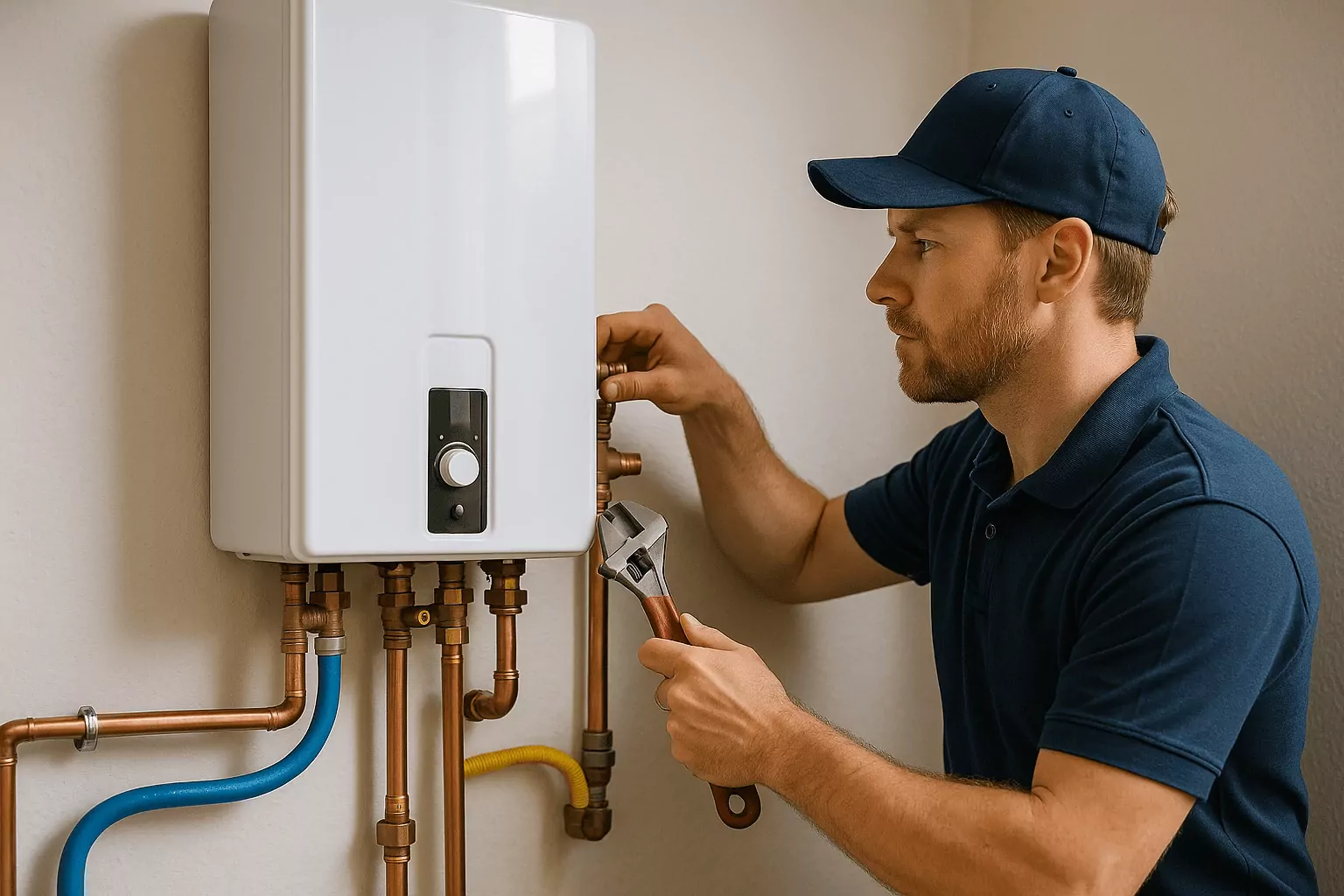
If you are weighing options for a more efficient home in Southeast Texas, tankless water heater installation Vidor is one of the smartest upgrades you can make. Unlike storage tanks that heat and reheat water all day, tankless systems deliver hot water on demand, trimming wasted energy and improving performance. Homeowners in Vidor, Orange, Beaumont, and Bridge City appreciate the combination of lower utility bills, dependable comfort, and compact design these systems provide. With professional guidance from a licensed local plumber, you can size a system to match your household, fixtures, and preferred fuel type. This guide breaks down the top benefits, real-world examples from the 409 area, and the professional steps that ensure safe, code-compliant results. By the end, you will understand how an on-demand unit can improve daily comfort while protecting your budget and adding long-term value.
Energy Efficiency and Utility Savings From Tankless Water Heater Installation Vidor
Tankless water heaters use high-efficiency heat exchangers to warm water only when a tap opens, reducing standby losses common with traditional tanks. According to the U.S. Department of Energy, homes that use 41 gallons or less of hot water daily can see energy savings of 24 to 34 percent with a tankless model compared to storage units. Even higher-use homes often realize 8 to 14 percent efficiency gains, and multiple point-of-use units can increase savings further. These improvements translate to lower monthly gas or electric costs, fewer reheat cycles, and less stress on your equipment. Over time, those savings help offset the higher upfront price of a quality on-demand system.
Local households in Vidor report noticeable changes on utility bills when replacing older 40- or 50-gallon tanks, especially units nearing the end of their lifespan. For example, a family of four in Orange using a mid-efficiency gas tank previously saw fluctuating bills due to constant cycling and heat loss in a hot garage. After upgrading to a condensing tankless model, their summer gas usage dropped and winter bills stabilized, thanks to sealed combustion and higher Uniform Energy Factor (UEF) ratings. Because the tankless system operates only during demand, it avoids the 24/7 standby heat loss that adds up in our climate. This real-world pattern is common across the 409 region where garages and attics get hot.
Durability also plays a role in long-term savings, since many tankless systems are designed for 15 to 20 years or more with proper maintenance. Storage tanks often last 8 to 12 years and can suffer catastrophic leaks that damage floors and drywall. With routine descaling and annual checkups, a tankless unit maintains its efficiency profile and extends service life. That long horizon helps spread the initial investment across more years of dependable hot water. For homeowners who plan to stay in their homes, the net cost of ownership can be very competitive.
Authoritative resource: U.S. Department of Energy on tankless water heaters
Endless Hot Water, Performance, and Right-Sizing for Tankless Water Heater Installation Vidor
One of the biggest advantages of tankless water heater installation Vidor is consistent, endless hot water when sized correctly for your fixtures and flow. Instead of depleting a stored volume, an on-demand unit keeps heating as long as the tap runs, making it ideal for back-to-back showers or filling soaking tubs. Proper sizing depends on gallons per minute (GPM) demand and the temperature rise needed for our local groundwater. A professional will tally your simultaneous uses and choose a unit that meets peak demand at realistic Southeast Texas inlet temperatures. This avoids the shortfalls some DIY installations face when they underestimate flow rates.
In the Golden Triangle, groundwater temperatures often hover in the mid- to upper-60s, which is warmer than northern regions but still important for calculations. If you want 120-degree water and your inlet is 70 degrees, your system must produce a 50-degree rise at the flow rate you expect. Showers, rain heads, kitchen sinks, and laundry can add up quickly, and large homes may benefit from 2 units in parallel. A recirculation loop can reduce wait times to distant bathrooms, and modern controls allow scheduled or on-demand recirculation to minimize wasted energy. With professional right-sizing, you get steady temperatures and comfortable flow even during busy mornings.
Condensing gas tankless heaters are a popular choice for larger households due to strong recovery and higher UEF ratings. Electric tankless models can work well for smaller loads or where gas is not available, provided your electrical service and breaker panels can support them. Smart features include modulation for stable temperatures, leak detection, and Wi-Fi diagnostics for quick service. Your installer can also integrate mixing valves and anti-scald protections to keep shower temperatures steady and safe. All of these choices stem from a detailed assessment during your initial estimate.
Authoritative resource: Consumer Reports on tankless water heater pros and cons
Space Savings, Safety, and Home Value With Tankless Water Heater Installation Vidor
Compact, wall-hung tankless units free up closets, utility rooms, and garage floor space, which is a plus for storage and future remodeling. In many homes across Vidor and Beaumont, converting from a large tank to a tankless model opens square footage for shelves, tools, or a mudroom bench. Outdoor-rated units can mount on exterior walls, further decluttering interior areas and simplifying venting. Because there is no large tank of water to rupture, the risk of major leak damage is reduced. These practical advantages blend convenience with peace of mind.
Modern tankless systems also include safety features such as sealed combustion, precise temperature controls, and advanced diagnostics. Condensing models vent with corrosion-resistant materials and can be routed safely through sidewalls when designed and installed correctly. Anti-scald controls help maintain safe hot water temperatures, and many units integrate freeze protection for brief cold snaps. The absence of a large, constantly heated tank also reduces standby heat impacts in garages and attics. In Southeast Texas homes where ventilation can be challenging, these design elements add an extra layer of safety and comfort.
From a resale perspective, buyers increasingly value efficiency upgrades that lower ownership costs. Real estate agents in Orange County often point out on-demand water heating as a premium feature alongside updated HVAC and insulation. Energy-efficient homes can attract more attention online, and inspected, code-compliant installations signal quality care. In rentals and short-term stays, endless hot water elevates guest satisfaction and reviews. With documentation and transferable warranties, your investment can be a selling point later.
Authoritative resource: ENERGY STAR tankless gas water heaters
Costs, Incentives, and Professional Installation in Vidor
Upfront costs for tankless water heater installation Vidor can be higher than standard tanks due to the technology and any needed upgrades. The total price depends on fuel type, venting route, gas line sizing, electrical capacity, condensate drains, and recirculation needs. Over the life of the unit, lower energy use, longer service life, and reduced leak risks help balance the initial investment. Federal tax credits and occasional utility rebates can further improve payback for qualifying ENERGY STAR models. Always confirm eligibility and documentation requirements before purchase to capture available incentives.
Professional installation is crucial for performance, warranty protection, and code compliance. A licensed plumber will evaluate gas line capacity, combustion air, vent lengths, condensate management, and clearances before recommending models. Proper commissioning sets temperature limits, checks for pressure drops, confirms recirculation schedules, and verifies leak-free joints. Permitting and inspections help ensure a safe, legal installation that protects your home and insurance coverage. In the 409 region, experienced pros know the local codes and best practices for garages, attics, and exterior walls.
Maintenance keeps efficiency high: annual flushing and descaling, filter cleaning, and water quality checks protect the heat exchanger. Homes with hard water benefit from scale inhibitors or softening to reduce mineral buildup and pressure loss. Many manufacturers require documentation of maintenance for full warranty coverage, making annual service a smart choice. For guidance, explore our water heater services, review the latest tips on our blog, or contact our team for a free estimate. You can also start here: tankless water heater installation Vidor.
Authoritative resources: ENERGY STAR federal tax credits and DSIRE: incentives, rebates, and policies by state
Tankless water heater installation Vidor delivers a powerful combination of efficiency, comfort, and reliability for homes across Orange County and the Golden Triangle. By heating water only when you need it, a right-sized, professionally installed unit can reduce energy use while supplying steady temperatures and flow. Compact designs reclaim space, advanced safety features add peace of mind, and long service life supports a strong return on investment. If you are ready to compare options, schedule a free estimate with 409 Plumbing to review sizing, fuel type, venting, and recirculation tailored to your home. Call 409 Plumbing at 409-444-0066. We proudly serve Orange, Beaumont, Bridge City, and nearby communities.
Frequently Asked Questions About Tankless Water Heater Installation
How long do tankless water heaters last in Southeast Texas?
With proper installation and maintenance, many tankless units last 15 to 20 years or longer. Annual flushing removes mineral scale that can reduce efficiency and shorten lifespan, especially in areas with hard water. Cleaning inlet screens and checking recirculation schedules keeps performance steady year-round. Because there is no large tank to corrode from the inside, failures are often less sudden than with storage heaters. Following manufacturer service intervals and using a licensed pro helps protect your warranty and investment. Over time, the extended lifespan contributes to favorable total cost of ownership.
Is gas or electric better for tankless water heater installation Vidor?
Both can work, but gas tankless models are common for higher-demand homes due to robust heating capacity and strong efficiency. Electric tankless can be great for point-of-use applications or smaller households if your panel and service can handle the amperage. Gas units need properly sized supply lines and compliant venting, while electric systems may require breaker and wiring upgrades. Fuel cost, existing infrastructure, and desired GPM all factor into the decision. A site visit helps determine the most cost-effective path for your layout and budget. For a deeper dive, see the DOE overview of tankless water heaters.
Can a single tankless unit serve multiple bathrooms at once?
Yes, if it is sized to meet the total GPM demand at the required temperature rise. A typical modern shower uses 1.5 to 2.5 GPM, and simultaneous showers plus a running sink can push demand over 5 GPM. Your installer will calculate peak usage and may recommend a larger unit, a recirculation loop, or dual units in parallel for big households. This ensures stable temperatures and pressure during morning rush times. In long ranch-style homes, a recirculation system can also shorten wait times at distant fixtures. Correct sizing is the key to achieving truly endless, comfortable hot water throughout the home.
What maintenance does a tankless water heater need and how often?
Most manufacturers recommend annual service that includes flushing the heat exchanger with a descaling solution to remove mineral buildup. Inlet filters and screens should be cleaned, condensate lines checked, and combustion or electrical components inspected. If you have hard water, a scale inhibitor or softener can reduce deposits and extend service intervals. Technicians will also verify temperature settings, review error codes, and confirm proper venting and combustion air. These steps protect efficiency, keep flow rates strong, and maintain warranty coverage. A simple yearly visit helps you avoid performance dips and unexpected repairs.

Registered Master Plumber Texas State Board of Plumbing Examiners
RMP #44702
Licensed and Bonded
Cities Serviced
409 Plumbing
Follow Us On
© 2026 409 Plumbing. All Rights Reserved.
Website Design and Hosting Provided by LocalBizBuzz,co